
Most People Think Court Is Only About Punishment But This Judge Had Something More to Say
When most people think of going to court they think of receiving a punishment. However, in some instances, moments in court can remind everyone involved that justice is not just about court is only about punishment.
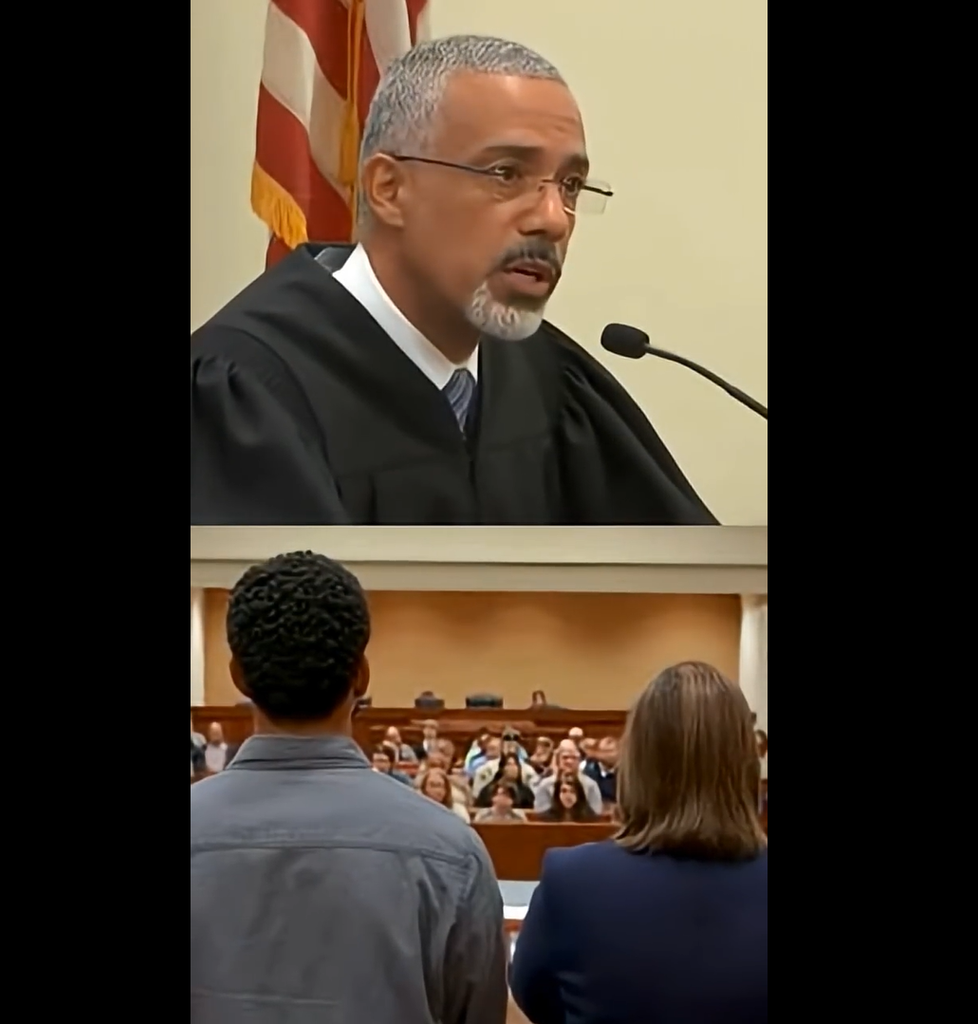
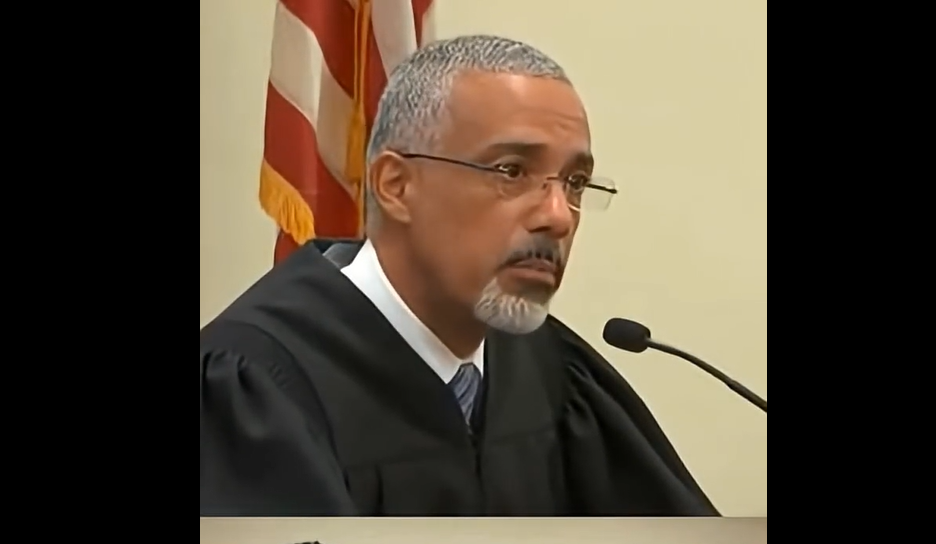
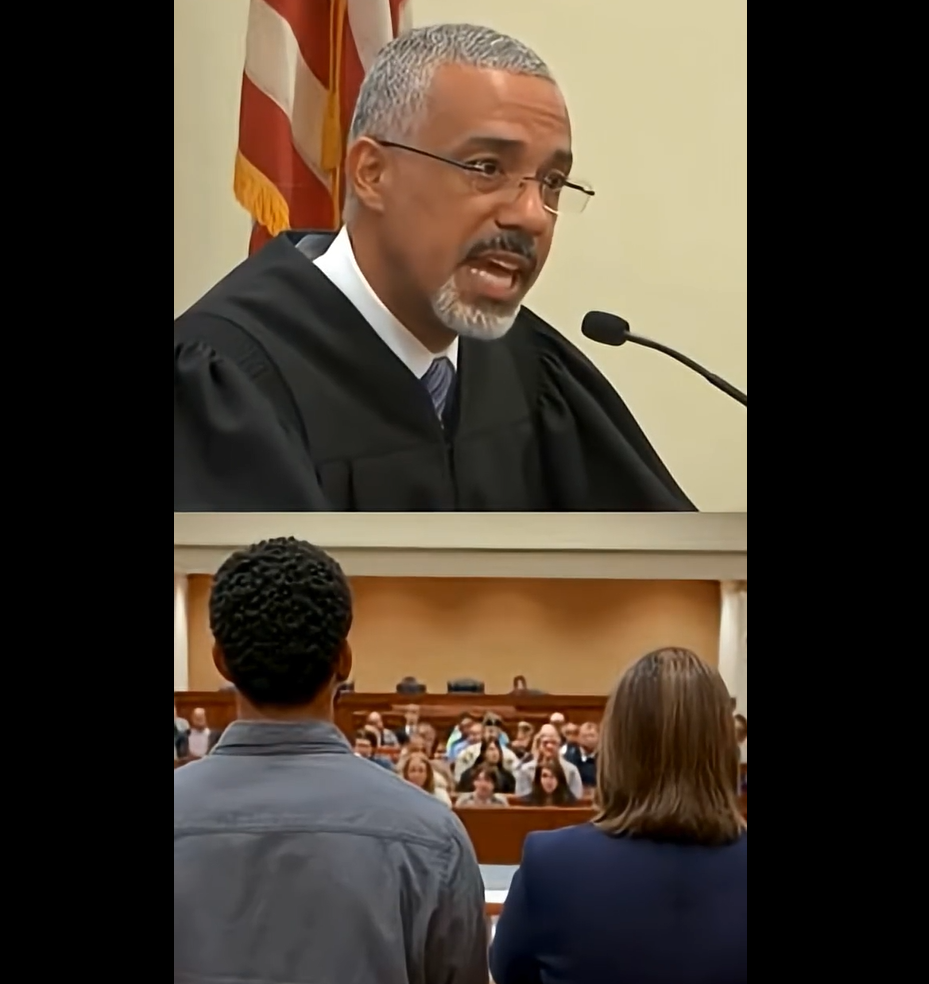
In this video we see an older judge with a firm tone, as he speaks to a young man and woman. The judge has a very serious look on their face and is moving slowly.
Although we cannot confirm what the judge is saying, this scene makes you think about why justice is not just about punishing someone, but making sure they understand what they have done.
The scene also raises the question of whether court is only about punishment or whether fairness and accountability matter just as much.
A young man in Court
Imagine Marcus Reed stood in a busy court room. He is wearing a grey top and there are many people seated behind him. By his side is Danielle Brooks wearing a blue blazer.
Note: These names and details are fictional. We have added this to give the scene a story like feel.
Standing in front of a judge can be a very uncomfortable moment for Marcus. Everything he does appears to draw attention to him. He knows that people can see him but they may not know why he is there.
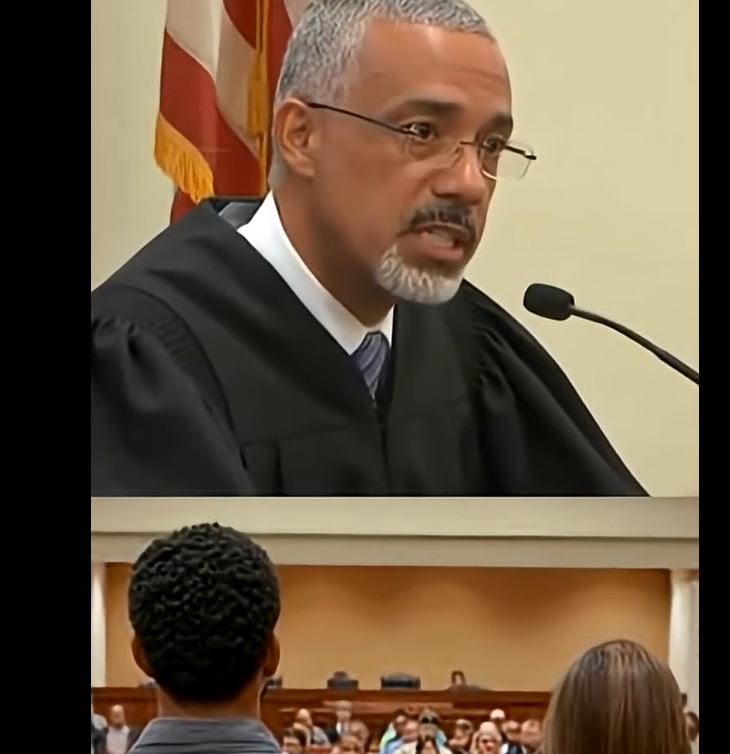
One of the problems with being judged in court is that people may not know why you are there or what decisions you have made, what pressures
you have been under etc. This is one reason why the idea that court is only about punishment does not tell the whole story.
A serious Judge
The judge is looking very serious and focused. They are leaning forward slightly and emphasising their words. Throughout the video we keep seeing their face.
Although we have added some fiction to this scene, Judge Thomas Ellis is not trying to create a show. He knows that court is a serious place and that
what he says can have long term effects. His job is to listen, consider the facts and deliver justice fairly.
Imagine him taking a pause. The court goes silent. Marcus is waiting to hear what he has to say and Danielle is by his side. No one in the court can be sure what is going to happen next.
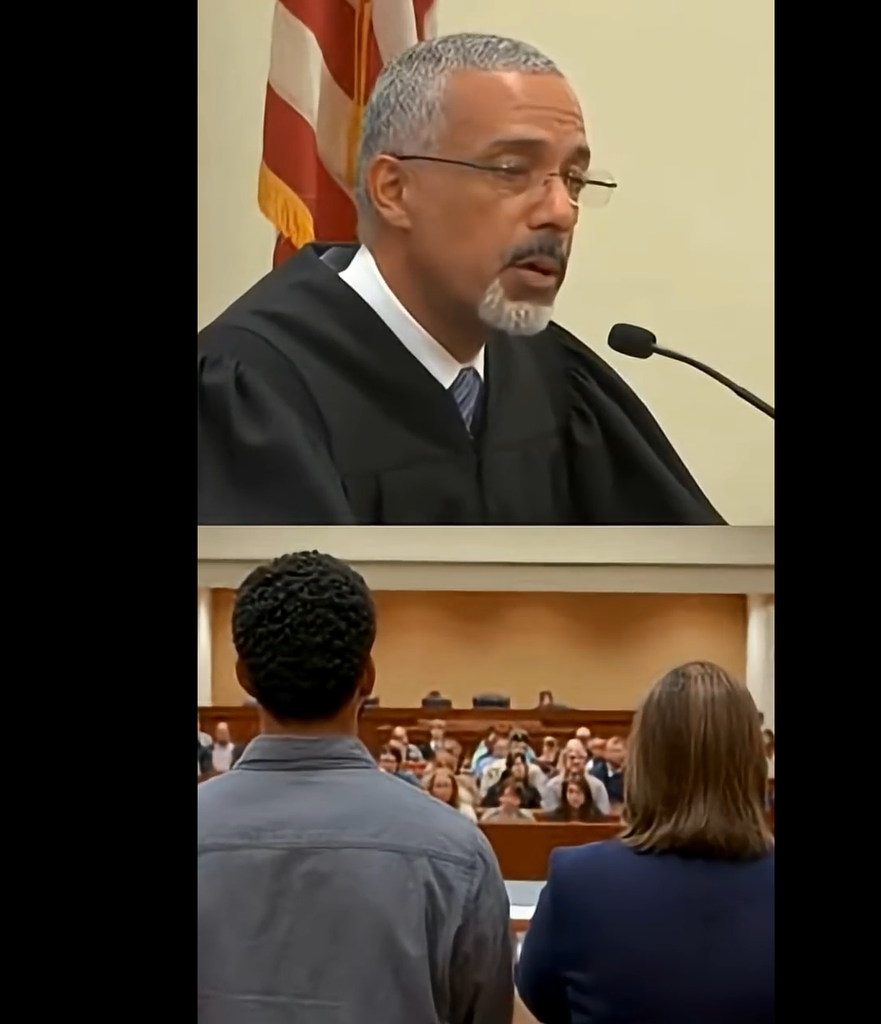
As we do not have a verified transcript from the real footage we cannot confirm what the judge is saying. However, we can see he is concentrating whilst speaking.
A serious expression alone cannot tell us whether court is only about punishment or what decision the judge may make.
Why punishment isn’t everything
Although punishment is an important part of the justice system, there are many other factors to consider. This can include holding someone accountable, being fair, helping someone improve and keeping the community safe.
Holding someone accountable can help them realise their actions have consequences. Being fair helps the community as decisions are being made based on evidence and the law.
In this imagined scenario, the most important part of the scene may not be the dramatic sentence that Marcus receives. It could be that he begins to realise that his decisions affect more than just him.
Whilst this does not undo his past mistakes or guarantee a different outcome, it can be the beginning of him making better choices.
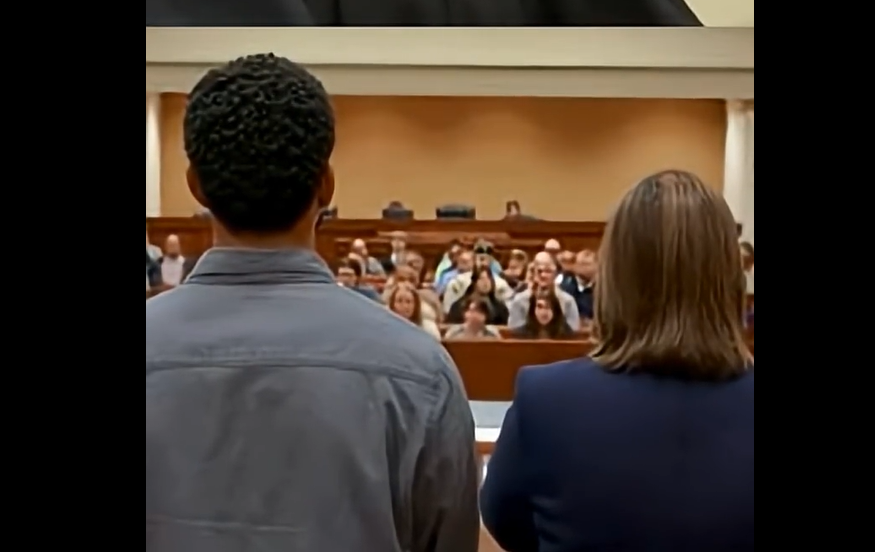
Note: This is a fictional interpretation. We do not know what the real defendant felt. We do not know the background to the case.
A Woman by his side
Having Danielle by his side gives this scene more of a human feel.
In real life family, friends, lawyers and supporters can feel uncertain. They may be worried about what will happen next, confused about complex processes or simply want things to be fair.
However, we are unable to confirm that the woman in the video is a family member or supporter of Marcus’. We do not know exactly what her role was and neither do we know the exact role of the young man.
Overall, this scene shows us that there is more to court. There are people standing in front of the judge and people watching from the gallery.
Everyone may have a different view but the legal process must still be followed. The idea that court is only about punishment overlooks the importance of fairness and following the law.
Key Takeaway
The main takeaway from this scene is that we should not define people by one moment. We do not know everything about the person from them standing in court.
We also cannot tell what the outcome of the case will be from the judges serious look.
Justice needs to be considered carefully. It should be fair and follow the law. Whilst holding people accountable is important, we should also be fair.
We shouldn’t assume that people know the whole story from just a few seconds of footage.
Perhaps this is why we are drawn to this short interaction. The judges serious look makes us wonder what they are saying and reminds us that these legal processes affect real lives.
We do not get to see the whole conversation and we do not know what the outcome was.
However, we are left with an important question. Should we see court as a place to punish people or as a place where accountability and fairness should go hand in hand? Ultimately, the question of whether court is only about punishment reminds us that justice involves more than what we see in a short video.
The Biggest Lesson: Justice Is About More Than Punishment
The biggest lesson from this courtroom moment is that justice is not simply about punishing people; it is also about fairness, accountability, and the choices people make afterward.
Everyone deserves a fair legal process, and no one should be judged solely by their appearance or a few seconds of video. Taking responsibility for our actions matters,
but so does learning from mistakes and making better decisions. True justice means holding people accountable while ensuring that fairness and human dignity are never forgotten.
More Courtroom Stories Read Now
Note: This article includes fictional names and an imagined storyline. We do not know who the people were, what they said, what the case was or what the outcome was.