
Caleb Brooks Tried to Finish His Courtroom Statement Then He Lowered His Head!
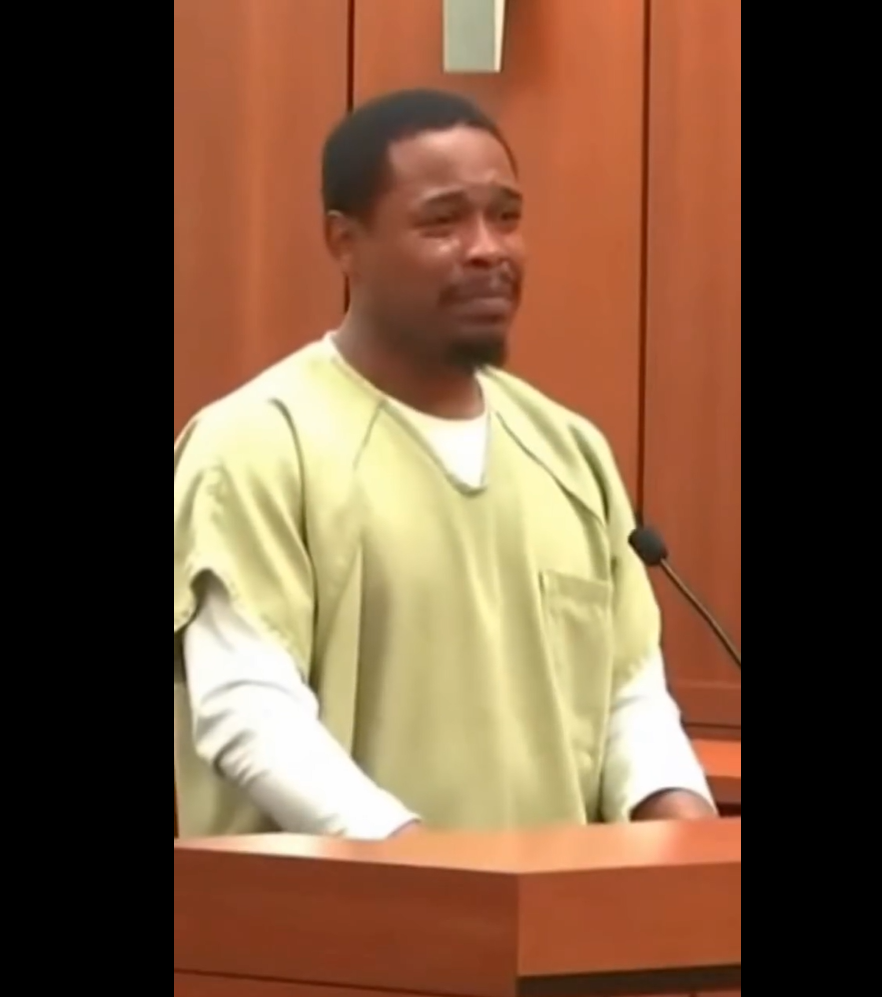
Caleb Brooks aims to stay composed during his statement. However, once he is at the podium with a microphone, wearing his pale green-yellow uniform, and begins speaking, he finds it very difficult.
After a brief pause, and placing a hand near his face, Caleb lowers his head. Within this fictional scenario, his emotional reaction reflects a difficult family memory, a regrettable choice, and a desire to change to uphold a promise. This Emotional Courtroom Statement highlights the emotional struggles that can remain hidden behind a person’s actions.

The Emotional Courtroom Statement That Caleb Struggled to Finish
Caleb lived with his mother Patricia Brooks and younger sister Emma in a modest area. When Caleb was 12, his father left. As a result, Patricia had to work very long hours at the local supermarket to provide for her children.
Caleb tried to make his mother’s life easier. He supported his sister with her studies and repaired items around the house. Whenever Caleb earned money, he tried to contribute to the family.
Caleb’s main goal in life was to give his mother a comfortable life.
Once Caleb finished school, he got a job in a warehouse. Although the wage was not great, Caleb was very proud of being able to earn money. On payday, he would buy food and occasionally a small gift for Emma.
Patricia would say to Caleb, “Caleb, I don’t need expensive things. I just want you to build a life you can be proud of.”
Caleb promised that this would happen.
However, things did not go as planned.
Secret Regrets
Caleb lost his job at the warehouse, leaving him in a difficult financial position. He quickly ran out of his savings. As a result, Caleb began relying on support from people who were not always making sensible decisions.
Caleb did not share these difficulties with his mother.

Caleb became very frustrated. He began ignoring some calls from people in his family. Although Patricia noticed a difference in Caleb, whenever she asked about his difficulties, he tried to avoid talking to her.
One evening, she finally said, “You don’t have to pretend you’re strong every day. I’m still your mother, and you can talk to me.”
Caleb replied, “I’m okay, Mom. I’ll figure everything out.”
But he wasn’t.
Eventually, Caleb made a series of bad decisions that resulted in legal trouble. As a result, he had to give a statement in court.
Caleb could no longer ignore the consequences of his actions. His Emotional Courtroom Statement would become a moment when he had to confront the decisions he had made.
Statement in Court
On the day of his court appearance, Caleb was very distracted. However, his lawyer, Daniel Foster, encouraged him to stay calm and tell only what he knew.
“Take your time, Caleb. Don’t rush your answers just because you’re nervous,” Daniel advised.
Caleb nodded.
Caleb was now standing at the wooden podium with a microphone in front of him. He began his statement, gesturing with his hands as he spoke.
Composed
Initially, Caleb appeared composed.
He looked forward and began to organise his thoughts. Although Caleb had rehearsed what he wanted to say many times, delivering his statement in court was very different.
Suddenly, every word felt significant.
Caleb knew that the court needed to understand the reasons behind his actions.
This part of the Emotional Courtroom Statement shows how difficult it can be to speak openly when personal memories and serious consequences become overwhelming.
Emotional Reaction
As Caleb continued to speak, his expression changed.
Caleb paused. He raised his hand towards his face, as though wiping tears from his eye. He then looked down before continuing to speak.
For a short period, Caleb regained his composure.
However, soon he seemed overwhelmed by emotion.
Caleb’s head lowered towards the podium, and he remained in this position. Although there was a microphone in front of him, Caleb was no longer focused on delivering his prepared statement.
Within this fictional scenario, Caleb was thinking about his younger sister Emma.
A few months earlier, Emma had asked Caleb to attend her graduation. She had said:
“Promise you’ll be there, Caleb. Everyone else is bringing their family.”
Caleb made this promise.
However, due to complications in his life, Caleb was unable to keep it.

Although Emma did not argue with Caleb, she stopped asking him to come. This made Caleb feel more upset than an argument would have.
What Caleb Would Like to Say to His Mother
Caleb was also thinking about his mother, Patricia.
Despite working extremely hard throughout her life, Patricia had always tried to ensure that her children did not feel deprived or vulnerable. However, Caleb had not shared his problems with her. As a result, she had been worried about him without knowing what was happening.
Caleb wanted to apologise to his mother.
He wanted to apologise for not replying to her calls, for breaking promises, and for making decisions without considering the people closest to him.
Caleb’s lawyer, Daniel, could see that he was struggling.
“Take a moment. There’s no need to rush,” Daniel reassured him.
Caleb lifted his head slightly and continued with his statement.
His Emotional Courtroom Statement was no longer just about delivering prepared words. Within this fictional story, it represented his desire to acknowledge his mistakes and take responsibility.
New Opportunities
Once he regained his composure, Caleb continued with his statement within this fictional scenario. Despite experiencing difficult situations, Caleb did not want to make excuses for his actions.
Instead, Caleb recognised that he needed to make better decisions.
He explained that he understood how serious the situation was and wanted to make better choices in the future.
Daniel remained with Caleb throughout the legal process.
Although there was no guarantee that everything would be fixed, Caleb understood that the evidence needed to be properly investigated. However, something had changed within him.
Caleb was no longer focused only on getting through this difficult situation. Instead, he was focused on rebuilding his life.
Caleb wanted his mother to believe in him again and for Emma to be able to rely on him. Most importantly, he wanted his future decisions to demonstrate that he had learned from this experience.

The Emotional Courtroom Statement represents a turning point in Caleb’s fictional journey, reminding us that accepting responsibility can be the first step towards meaningful change.
Conclusion
Within this fictional scenario, Caleb demonstrates that people may struggle in ways that remain unknown to others. If people begin to lose direction, make bad decisions, or become too afraid to reach out for help, problems can develop and become difficult to manage.
However, despite making mistakes, people can learn from them.
Being honest about the situation, taking responsibility, and taking practical steps towards change are important.
Although this short video shows Caleb reacting emotionally in court, we do not know why he reacted this way, what he was speaking about, or what happened afterwards. There is far more to this fictional situation than what is shown in the video.
Sometimes, it takes real courage to stop putting on a façade and accept that change is necessary.
This Emotional Courtroom Statement reminds us that behind every emotional moment, there may be a personal struggle that others cannot see.

Read another emotional courtroom story
Official website: United States Courts
Note: Caleb Brooks, Patricia Brooks, Emma Brooks, and Daniel Foster are all fictional characters. Their family story, dialogue, and the legal context surrounding Caleb are entirely fictional. We cannot determine the identity of the real man in the video, why he was acting this way, or the outcome of the actual case.