
The Judge Walked Out of the Courtroom – And That’s When the Defendant Finally Broke Down
I still remember the day I first walked into a courtroom for my client’s hearing. The room seemed tense as Emily Parker shifted uncomfortably in her orange jail uniform.

She was a twenty-eight-year-old woman, though her trembling frame and nervous energy reminded everyone that she was still relatively young. Her court-appointed lawyer, David Miller, sighed heavily as he tried to control her constant questions. Judge Rebecca
Williams calmly read the file in front of her while occasionally looking over at Emily. At first, the woman seemed to have her act together, replying promptly and
shaking her head whenever someone interrupted her. However, the further the hearing went, the more frustrated Emily became. Nobody in the courtroom
could have known that in a few minutes, they would witness a completely different side of Emily Parker.
“Ms. Parker, let me finish speaking,” Judge Williams said as she tapped her pen in irritation. “Your Honor, but you don’t understand!” Emily Parker responded,
flustered. David turned to the woman and whispered, “Emily, let her talk. You’ll get your turn.” Emily looked at her lawyer, surprised. “Mrs. Williams, I have been
explaining myself for weeks!” she exclaimed. “Each time I try saying something, someone interrupts me!” “I apologize, but I would appreciate it if you could let me do my job.” David said.
However, the defendant was in too emotional of a state to pay attention to her lawyer. She turned towards the judge and continued explaining the details of the case.
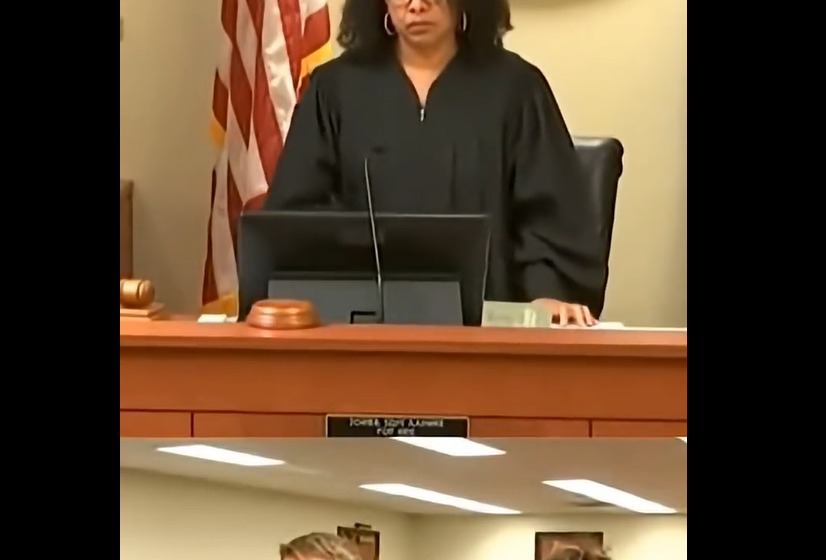
The judge took a sharp breath and replied, “I understand your concerns, but you cannot justifiably interrupt this hearing.” “Your Honor, I’m not trying to disrespectful,”
Emily responded. “I’m just feeling especially helpless right now.” “Your Honor, I deeply apologize for my client’s behavior,” David interjected. “
This hearing is causing her too much stress.” “That’s not helpful, Mr. Miller,” Emily snapped. “Nobody wants to hear what this hearing or you have to say!” David looked at her, momentarily at a loss for words. “Now, Ms. Parker,” the judge began, “if you allow us to
continue, you will have sufficient time to voice your concerns.” Emily looked down for a moment before composing herself. “Ms. Williams, what you don’t understand is that I am dying,” Emily replied. “Dying inside? Or going to prison?” the woman snapped, regretting
the words as soon as she said them. “None of that means you continue behaving like the victim here,” the judge responded. “It is highly inappropriate for you
to keep interrupting critical parts of this hearing.” “I understand that, but it is not easy for me to stop,” Emily said in a trembling voice. “Nobody cares to listen to what this is doing to me,” the lady replied. “Your Honor, the problem is not with my client, but with this hearing
and my own incompetence as a lawyer,” David stated. “Emily, please calm down,” he pleaded. “I was trying to do that all along, Mr. Miller!” she shot back. “
What if nobody wants to hear what I have to say?” David took a breath. “You have to speak up for yourself if you expect anyone to listen,” he replied.
At this point, the judge was in no mood to listen to any of the defendants’ arguments. “Ms. Parker,” she said, “I urge you to let me finish speaking.” “Your Honor,
I cannot do that,” Emily responded. “I am trying to explain my circumstances to you!” “My dear Ms. Parker, circumstances do not dictate results,” the judge replied. “What you have done is wrong, period.” Emily looked away, angry with herself. “All you talk about are your circ
umstances and documents, but nobody asks how you feel about me leaving,” the defendant said in a shaky voice. “You do realize this is not the most appropriate
place to voice your concerns, Mrs. Williams,” her lawyer reminded her. “I want to hear what you have to say
right now, Mr. Miller,” Emily replied. “Nobody wants to hear what I have to say,” the woman muttered. “Your Honor, my client has had enough of this hearing,” David stated. “If she may, she would like to explain her circumstances without interruption.” “I understand how
frustrating this hearing has been for you, but as I have already said, your interruptions are inappropriate,” Judge Williams replied tersely. Emily looked up from
her papers, surprised. “Did you just say I was being inappropriate?” she asked. “Perhaps so, but you seem to
forget that I am not the defendant in this case,” the woman replied. “I have been trying to do my job properly since this hearing began,” the judge said. “Your job is to listen to what I have to say regardless of your personal feelings,” Emily responded.
The judge paused momentarily. “I must remind you that this is indeed my job, Ms. Parker,” she said. “And I would also remind you that what you feel and how you
feel it are entirely your own personal feelings,” Emily said. “In fact, I should be listening to what I am saying.” The judge sighed. “Your hearing will resume in a moment,” she said as she stopped her
pen. “I will go out for a bit of fresh air.” Silence filled the courtroom, save for the occasional whimper from Emily. David looked on, concern etched in every
line of his facial features.

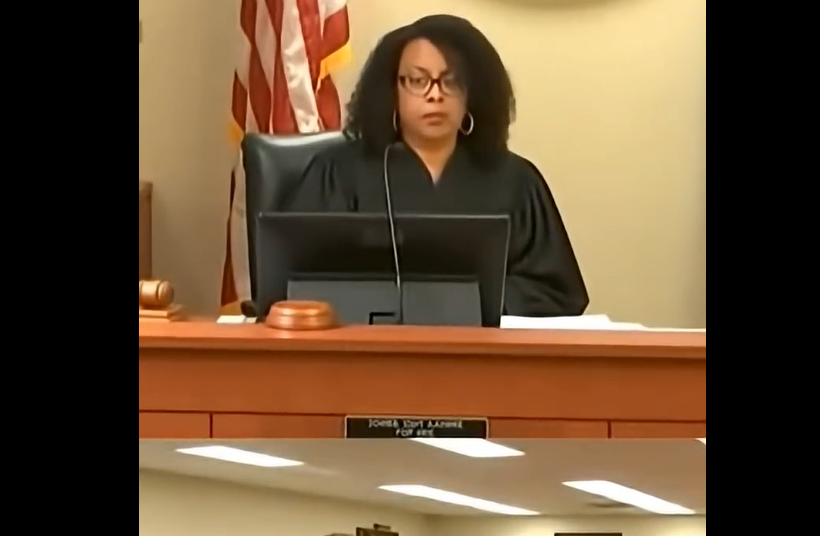
As the judge walked away from the bench and out the courtroom door, Emily sta
red, frozen. She was expecting another round of questions and accusations and instead got an empty chair where the judge had just been sitting. Finally, he turned to his client and asked, “Are you okay?” “No,” she said. Th
e woman’s reply was more of a moan than an answer as she wiped her face with her handkerchief. “I always pretend things are worse than they are, but I can no longer
deal with this,” Emily continued. David closed the folder and said, “You still think that lying to me helps?” E
mily looked down and replied, “I know you want me to tell the truth, but I can no longer bear these pretenses of mine. Sometimes I just feel so… angry, and I do not know what fuels that anger.” “Emily, I cannot understand it if you do not try,” David said. “I
t doesn’t happen like that for me,” the woman replied. “When I feel this way, I want to hurt someone, or more accurately, to be hurt by someone. If I hurt people, I feel even worse about myself, but if I am injured, it is less of a surprise for me.” “You do realize that
none of this has any bearing on the allegations made against you?” David asked, surprised at himself. “It may not have bearing on these specific allegations, but it is
an adequate explanation of the circumstances surrounding them that I have tried and tried to provide,” Emily retorted. “Ms. Parker, all I am asking you to
do is admit that you acted improperly in this instance and move on to the next one in due time,” David said. “I know you do not want me to feel sorry for you,” Emily replied, “but I also know that I am not sorry for what has
happened to me.” “Neither is it good that you feel you are in the wrong for what you have done,” David responded. “It may be good that you have the courage to admit it.” Emily turned towards the empty chair in the center of the courtroom. “If you have the
courage, then maybe it is time I stopped being sorry for this part of myself and accepted that it is there to stay,” Ms. Parkinson answered. A long pause followed as she slowly looked over at David. “Sometimes the simplest admission of wrongdoing is an important step
towards accepting accountability for that wrongdoing,” David continued.
Perhaps it was the long pause that followed, perhaps Emily’s uncharacteristic silence, but after the hearing, the woman looked over at David with
slightly fewer accusing eyes. “Thank you for not stopping me,” Emily said as she prepared to depart. “You did not do anything specifi
c to deserve my gratitude,” he replied. “In fact, I am not sure what I am grateful for. Perhaps I am grateful that it is finally sinking in that I cannot have everything I want in life?”
“As far as you know, it still can happen,”
the lawyer smiled. “In any case, what is past is past, and we must accept it in order to move on with our lives,” Emily replied.

Editorial note: The above courtroom scene is based on the video actually present. However, the above story is fictional, and its characters, plot, and content are entirel
y products of this writer’s imagination. Although the keywords and meta description have been optimized for the search engine, no article can guarantee its position in search results.